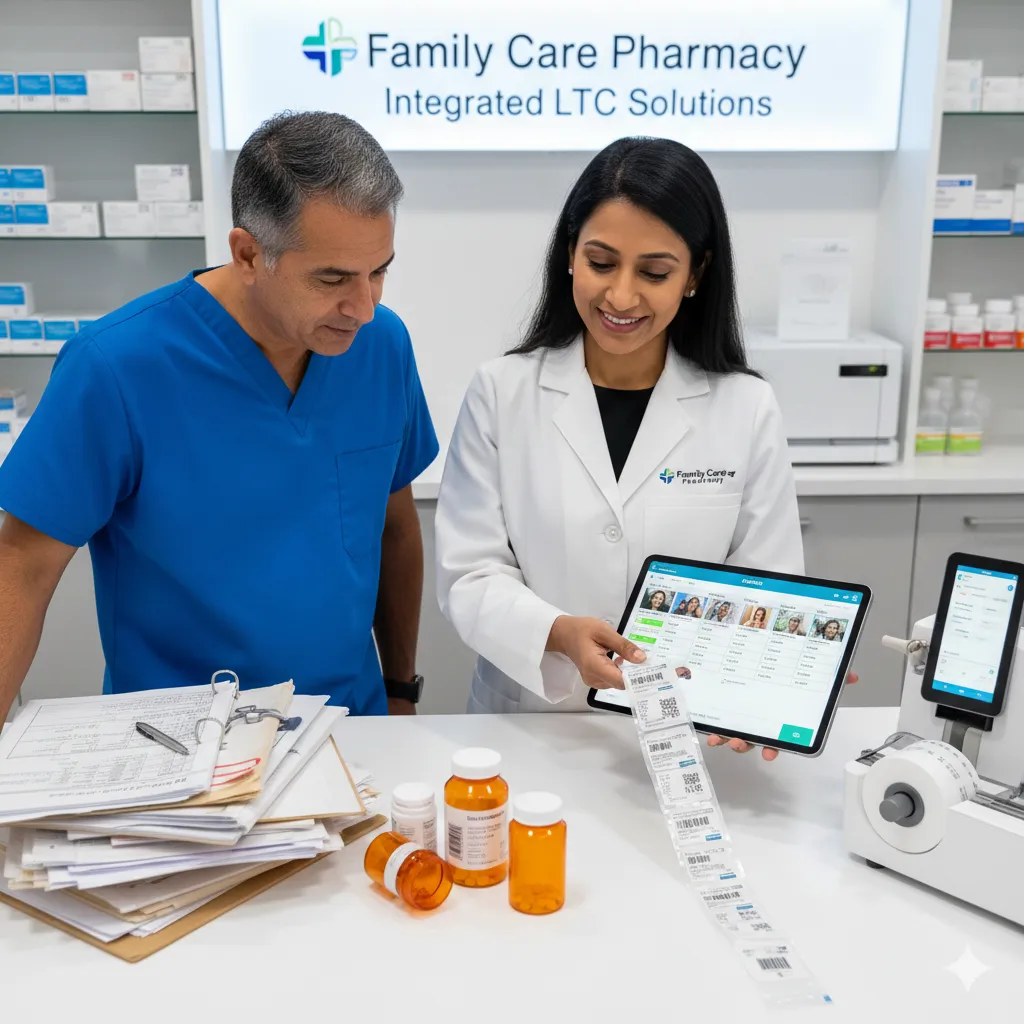
Why LTC Facilities in NJ are Switching to Integrated Medication Pass Systems
As a pharmacist who has spent years working alongside the dedicated teams in Long Term Care NJ facilities, I have witnessed the "medication pass" transition from a routine task to one of the most high-pressure hours of a nurse's day. If you walk into any assisted living facility in Passaic County during a shift change, you can feel the tension. It is a race against the clock to ensure every resident receives the right pill at the right time, all while navigating the inevitable interruptions that come with patient care.
Lately, the conversation with administrators in Totowa and across New Jersey has shifted. It is no longer just about getting the medications delivered; it is about how those medications are "passed." The traditional method—sorting through bulk bottles or messy blister packs—is being replaced by integrated medication pass systems.
At Family Care Pharmacy, we are seeing firsthand why this shift is happening. It isn't just a technological upgrade; it is a vital response to staff burnout and a commitment to resident safety in an increasingly complex healthcare environment.
The Breaking Point: Addressing Staff Burnout
The primary driver behind the switch to integrated systems is the human element. The nursing shortage in New Jersey is real, and the staff who remain are often stretched thin. When a nurse is responsible for a medication pass Totowa residents rely on for their health, the cognitive load is immense.
Imagine having to "punch" dozens of different pills, verify them against a paper MAR (Medication Administration Record), and ensure no doses are missed, all while being interrupted by call bells or family questions. This repetitive, high-stakes manual labor is a leading cause of burnout.
Integrated systems, such as strip packaging or "pouch" systems, remove the "sorting and punching" labor. Each dose is pre-sorted by the pharmacy into a chronologically organized pouch, clearly labeled with the resident’s name, the drug, and the exact time it should be given. This changes the nurse’s role from a manual sorter to a clinical observer. It gives them back the one thing they need most: time to actually look at the patient.
Reducing the "Shift Change" Risk
In assisted living pharmacy care, the most dangerous time for a medication error is during a transition. Whether it is a resident returning from a hospital stay or simply the hand-off between the day and night shift, communication gaps can lead to "double-dosing" or missed medications.
Integrated systems utilize eMAR (electronic Medication Administration Record) technology that "talks" directly to our pharmacy software. When a nurse scans a barcode on a medication pouch, it automatically updates the resident’s digital record. If a dose is missed, the system flags it immediately. This level of integration creates a "closed-loop" that protects both the resident and the staff's professional license.
The Financial and Regulatory "Win"
Beyond safety and staff retention, there is the matter of NJ state regulations. New Jersey has some of the strictest oversight for long-term care facilities, and surveyors in 2026 are looking closely at medication error rates.
Integrated systems provide an audit trail that paper records simply cannot match. For administrators, this means:
Reduced Waste: No more throwing away half-used blister packs when a medication is discontinued.
Streamlined Audits: Reports can be generated in seconds, showing perfect compliance with "the six rights" of medication administration.
Lower Liability: By reducing the opportunity for human error, facilities significantly lower their risk profile.
Making the Switch in 07512
I know that changing a facility-wide system feels daunting. But the transition to an integrated med pass is about future-proofing your facility. We work with Totowa teams to ensure the transition is seamless, providing the training and technical support needed to move from "stressed and manual" to "streamlined and safe."
FAQs
What is an integrated medication pass system in long-term care?
An integrated system combines automated pharmacy packaging (like multi-dose pouches) with electronic records (eMAR). This ensures that medications are pre-sorted by time and date, and every administration is digitally tracked to prevent errors and improve efficiency.
How does medication synchronization help assisted living facilities?
Medication synchronization, or "Med Sync," ensures that all of a resident's refills are processed at the same time. In an LTC setting, this means the pharmacy can deliver a complete, organized cycle for the entire facility at once, reducing the administrative burden on nursing staff.
What are the most common medication errors in NJ assisted living facilities?
The most frequent errors include "wrong time" administration, omitted doses, and documentation gaps. These often occur during busy shifts or when staff are distracted. Integrated barcode systems are specifically designed to catch these errors before they reach the resident.
Can a pharmacy help reduce nurse burnout in long-term care?
Yes. By providing organized, pre-packaged medication systems and managing the refill and authorization process, a pharmacy can save nursing staff several hours per day. This allows nurses to focus on clinical care rather than clerical and manual tasks.
What are the NJ requirements for medication storage in LTC facilities?
New Jersey law requires medications to be stored in a secure, locked area or a locked medication cart. Controlled substances require additional double-locking and strict shift-count protocols. Integrated systems often include automated carts that track access and inventory levels.
Is Your Facility Ready for a Change?
The "old way" of passing meds is no longer sustainable for the modern NJ healthcare landscape.
Would you like me to visit your facility this week for a "Workflow Audit" to see exactly how much time your nursing staff could save with our integrated medication pass system, or should we schedule a demo of our 2026 eMAR integration?
